
Why an International Finance Summit
Why we need an International Finance Summit
Every child deserves the best possible start in life.
The early years are a once-in-a-lifetime opportunity. Experiences in early childhood – both positive and negative – shape the foundations for health, learning, behaviour and wellbeing. When children grow up with good nutrition, access to healthcare and opportunities to learn and play, they are more likely to develop the skills they need to thrive.
But when these foundations are missing, the consequences can last a lifetime.
“More than half of the world’s young children are missing out on the early childhood care and education they urgently need.’
Sarah Brown, Theirworld
Gaps that emerge earlier are much harder – and far more expensive – to address later. When we miss this early window, we allow inequality to take root — shaping futures before children have had a fair chance.
We know what children need. But is the world willing to finance it?
Existing financing rarely treats the early years as a system. Early childhood is often subsumed under education, health or social protection — and as a result, is never fully financed.
Underinvesting in the early years is not neutral. It leads to higher future costs in education remediation, health systems, social protection and lost productivity — costs that fall directly on national budgets.
The global gap: who is being left behind?
Despite global commitments to education and development, access to early childhood care and education remains deeply unequal.
Around 350 million young children worldwide need early childhood care, development, and learning, but cannot access it.
Children living in poverty, those affected by conflict or crisis, children with disabilities and those facing discrimination are far more likely to miss out. Under-resourced services and a lack of trained workforce mean that those who would benefit most are the least likely to receive support.
But this is not simply a question of access. It is a question of political priority and financing. Early childhood systems remain chronically underfunded and fragmented, leaving millions of children without the support they need — not because solutions do not exist, but because sustained investment does not.
If the returns are so high, why is investment still so low?
The evidence is clear. Investment in early childhood delivers some of the highest social and economic returns of any public policy intervention. For every US $1 invested, returns of up to US $17 can be generated — particularly for the most disadvantaged children.
So why does early childhood remain so underfunded?
Part of the answer lies in how early years services are financed. Responsibility is often fragmented across ministries — health, education, social protection — with no single budget line or coordinating mechanism. This means no single ministry owns the full picture and early years funding can fall between the cracks.
Early childhood also rarely dominates political debate. The benefits of early childhood investment are often perceived as long-term, with impact thought to materialise beyond electoral cycles — even though meaningful results can be seen within just a few years.
International funding patterns reflect the same imbalance. Global summits have unlocked billions for climate, infrastructure and emergency response. Yet early childhood — which underpins progress across all these areas — receives only a small share of comparable investment.
That is why stronger global leadership matters.
“Underinvestment in the early years perpetuates poverty and inequality. We know what we need to do – we just have to get it done. Investing in children unleashes the potential of women, families and entire communities.”
Catherine Russell, Executive Director, UNICEF
Momentum is growing — but it is uneven
Across regions and income levels, leaders are recognising that investment in the earliest years is foundational to building fairer and more resilient societies.
Countries such as Singapore, Canada, Rwanda, India, South Africa, the Philippines, the United Arab Emirates, Morocco, the United Kingdom, Ireland, Japan, Australia and Brazil are expanding early childhood services and strengthening early years policy across health, education and social protection.
In countries facing conflict and crisis, including Ukraine and Jordan, early childhood support is increasingly recognised as a vital part of emergency response and national recovery, helping to protect children, stabilise families and rebuild communities.
But while political recognition is increasing, progress remains uneven.
In some places, early childhood is becoming a national priority. In others, it remains under-resourced or dependent on short-term funding. The result is a patchwork of progress with outcomes depending too heavily on where a child is born.
Why an International Finance Summit matters
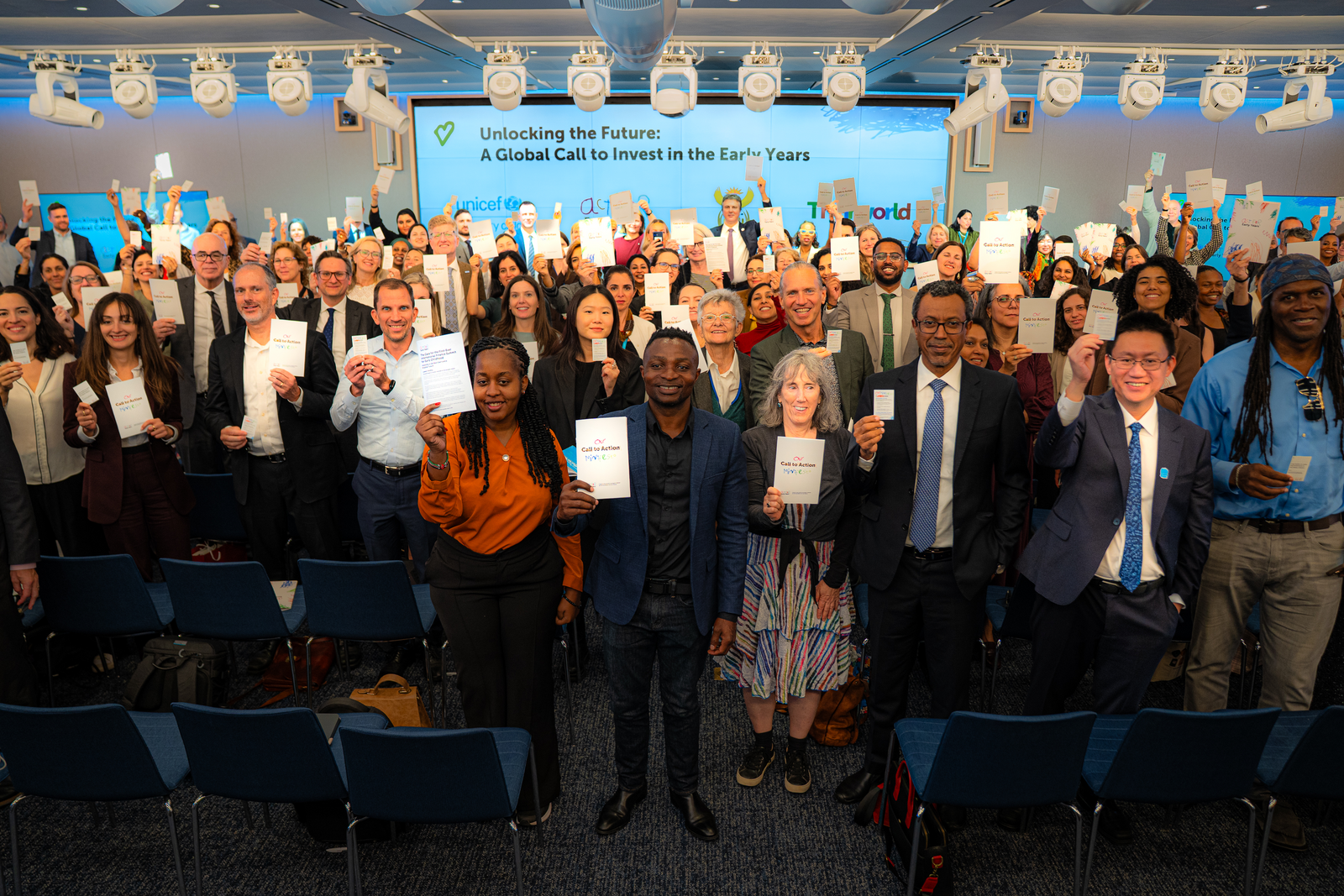
The inaugural International Finance Summit for the Early Years would bring together governments, international financial institutions, donors and partners to commit to financing early childhood at the scale required.
The evidence on what works is already strong. What is needed now is coordinated, long-term investment — across health, education and social protection — and closer alignment between local budgets, national budgets and international financing. A summit would create space to strengthen commitments, improve coordination and protect early years investment during periods of economic pressure, while ensuring funding reaches the children who are currently excluded.
Global gatherings are proven to have helped mobilise financing for climate and health. The early years require the same level of sustained attention and alignment.
Investment at this stage underpins progress in education, workforce participation and long-term social stability. Without more consistent and coordinated financing, progress will continue to depend too heavily on where a child is born.
“The summit will give us the platform to chart a bold course for how the world can finance proven solutions that deliver real change for children and their families.
Siviwe Gwarube, Minister of Basic Education, South Africa
When leaders align around early childhood as a foundational investment, coordinated financing follows — enabling countries to scale proven solutions, protect budgets, and close gaps for the children currently left behind.
An International Finance Summit offers an opportunity to change that — by treating early childhood not as optional spending, but as a foundational investment in more equitable and prosperous societies.
