
New Hungarian government puts early years at heart of education reform
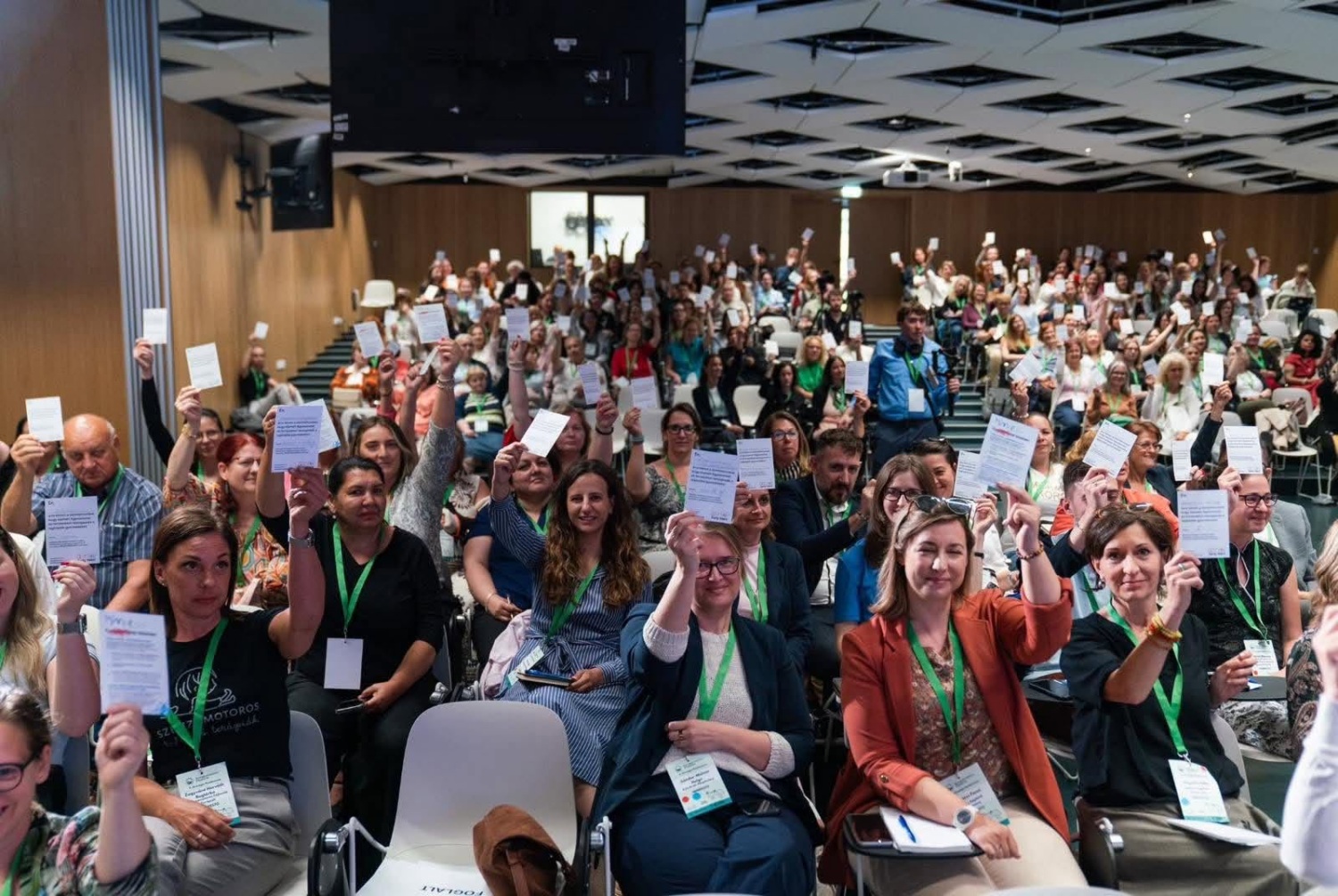
ABOVE: Attendees at the Hungarian early years conference hold up their signed ‘Minifestos’
A growing momentum to transform how Hungary supports its youngest children was celebrated at the country’s national early years conference, marking what many see as the beginning of a new chapter.
More than 350 early childhood professionals, policymakers, researchers and civil society representatives gathered in person and online in Budapest on June 4th, united by a shared purpose – to reimagine systems so they truly serve children and families.
The conference also amplified the Act For Early Years campaign, with attendees signing copies of the ‘Minifesto’ – a child-sized call to action, urging leaders to make bold investments in the earliest years of life.
In light of the recent Hungarian election, several invited early years experts arrived at the conference in newly-appointed roles as government minister, state secretary and commissioner.
The sense of optimism was captured by Judit Lannert, appointed Minister for Education and Children’s Affairs last month. She pledged to place children and families at the centre of policymaking, saying: “I would like to meet the parents and children first – the rectors will have to wait a bit.”
Lannert also outlined a forward-looking vision for the new ministry, adding: “We are designing a child-centred, data-driven and partnership-based system.”
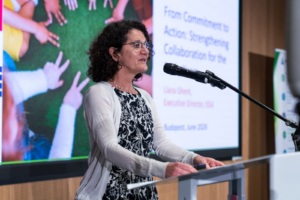
Above: ISSA Executive Director Liana Ghent addresses the Hungarian conference
The Second National Conference of the Early Childhood Platform was organised by Partners Hungary Foundation and the Carpathian Foundation, in partnership with the International Step by Step Association (ISSA) and Act For Early Years.
A key focus was showcasing local solutions through the Minifesto Initiative, part of the global Act For Early Years campaign. The initiative highlights sustainable, community-driven practices that make it “good to be a child,” demonstrating how integrated support systems can work in everyday life.
ISSA, a network championing equitable, high-quality early childhood development, sees this moment as a turning point. ISSA Executive Director Liana Ghent noted that Hungary is rapidly adjusting to having a dedicated education ministry once again after many years.
She described the conference as “a moment where long-standing expertise, lived experience and policy attention met, with a shared sense that something is beginning to shift.”
Ghent added: “The State Secretary for Children’s Affairs reinforced the importance of coordinated, child-focused systems, while the Government Commissioner emphasised that ideas long developed within the professional field on early intervention, equity and child well-being must now translate into real, systemic change.”
This transformation, she stressed, depends on acting early before challenges escalate, strengthening coordination between education, health and social services, and designing systems around the real lives and needs of children and families.
Looking ahead, participants left with a shared understanding that this moment must lead to sustained action. The challenge now is to turn renewed political will and professional knowledge into sustainable systems that reach every child, in every community.
With new leadership, growing collaboration across sectors and a strong foundation of local innovation, Hungary is positioning itself to build an early years system that not only responds to today’s needs but shapes a more equitable future.
As momentum continues to build, there is a clear recognition that investing in the earliest years is no longer a marginal issue but a defining priority for the country’s social and economic wellbeing. There is a renewed sense of possibility for Hungary’s youngest children.
