
Before the Workforce, the Playground: An African Activist’s Minifesto for the Early Years

Written by Alwande Moyo, Act For Early Years Youth Champion
“Each generation must, out of relative obscurity, discover its mission, fulfil it, or betray it.” — Frantz Fanon
Fanon’s words echo with a profound, urgent gravity today. As we mark World Youth Skills Day—established in 2014 to address the quiet tragedy of youth unemployment—we stand at a historic crossroads. The 2026 theme, “Skills for a Shared Future,” calls for inclusive, equitable, and future-ready training opportunities.
Yet we cannot dare to speak of a shared future or youth skills while ignoring the fragile, irreplaceable early years where the human mind is first formed.
Growing up in Zimbabwe, I watched brilliant, sharp-minded childhood friends fall behind simply because their families lacked the means for early stimulation or proper nutrition: a quiet loss which no late-stage intervention could recover.
I witnessed first-hand the structural inequalities and came to a daunting realisation that there is no youth without the child, no World Youth Skills Day without early childhood skills. The architecture of a prosperous Africa is not built in universities or vocational centres; it is designed in our playgrounds, communities, and homes during the first five years of life, when 90% of brain development occurs.
If we seek a self-determining African future, we must recognise that the skills gap does not begin at eighteen—it begins even before a child takes their first breath.
To look at a toddler is to witness the beginning of an African renaissance. The foundations for lifelong learning, resilience, and economic participation are established long before a child enters formal schooling.
During these years, the brain forms more than one million neural connections every second, shaping cognitive flexibility, emotional resilience, communication, and problem-solving abilities.
Quality early childhood development is foundational economic infrastructure. Through play, exploration, and storytelling, children develop the ability to negotiate, adapt, collaborate, and think critically. They learn how to respond when challenges arise and how to engage with others constructively.
Early childhood development prepares children to become adaptable, skilled youth. When we deny African children access to quality early learning, we undermine their future ability to innovate, lead, and participate meaningfully in the modern economy. We weaken the workforce before it even exists.
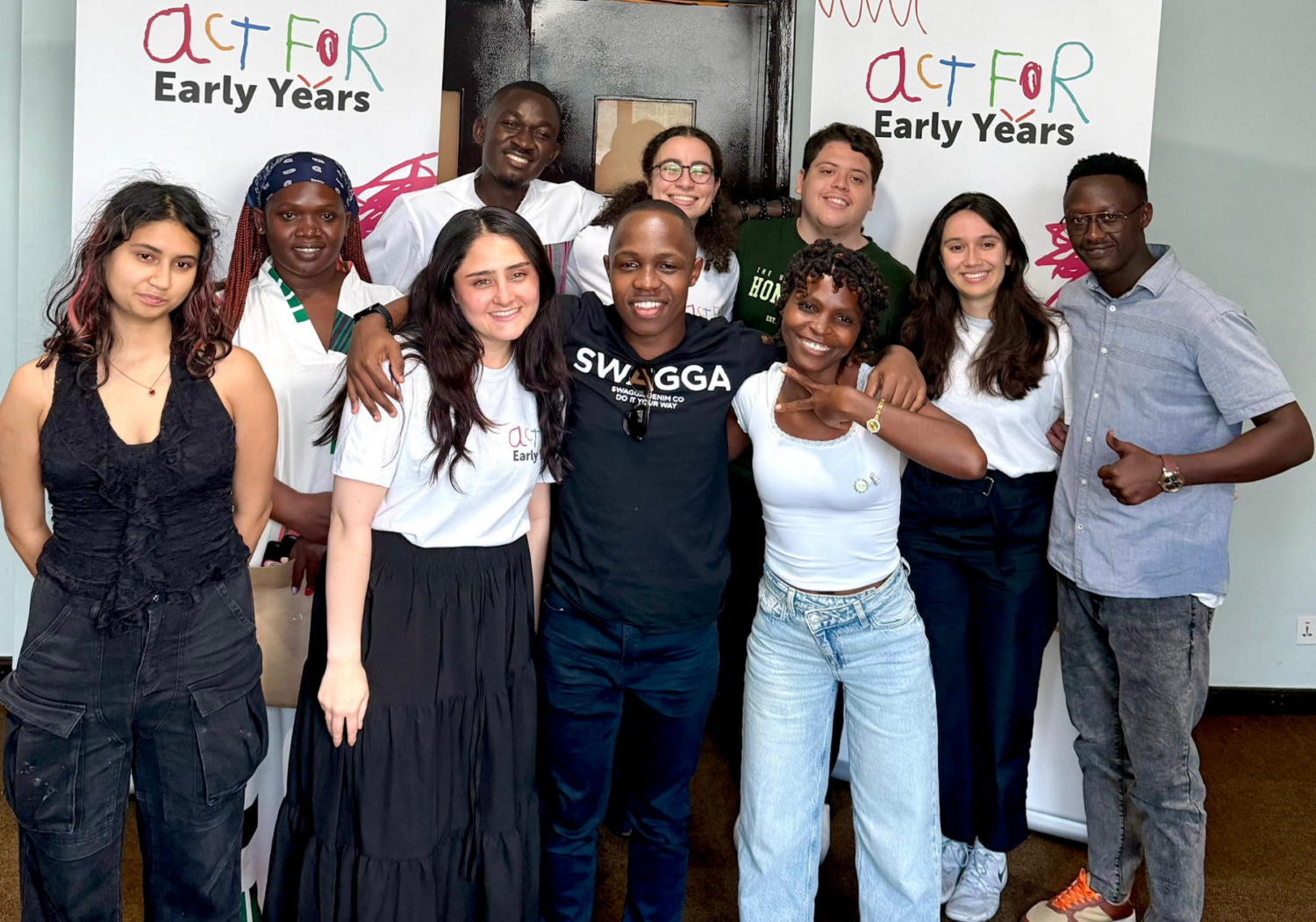
As a global working group, the Act For Early Years Youth Champions refuse to let decisions about our future be made without our voices. This year, our journey took us to Dar es Salaam, Tanzania, for intensive Youth Foresight Training. There, we explored strategic foresight tools, from backcasting to the Futures Triangle framework, examining how the world can anticipate and shape emerging futures.
Ultimately, we adopted the Futures Triangle as our preferred methodology. By mapping the pull of our aspirations, the push of present drivers such as technology and youth energy, and the weight of historical constraints including underfunding and colonial educational legacies, we created a framework that bridges early childhood development and youth advocacy.
This approach strengthens our youth consultations and informs the rollout of our global Youth Vision Survey. Young people are no longer passive recipients of policy; we are active participants in shaping it. We are demonstrating that youth perspectives, future skills, and early childhood policy are deeply interconnected.

Ten Act For Early Years Youth Champions in Dar es Salaam, Tanzania for Youth Foresight Training, April 2026
So far, our youth consultations have revealed both hope and hardship.
In Mauritius, where I am a student, despite its status as an aspiring high-income economy, significant inequalities remain. While some children benefit from technology-enhanced early learning, others face overcrowded centres, underpaid educators, and limited access to holistic support services.
In Zimbabwe, communities continue to show remarkable resilience, yet chronic underinvestment leaves many rural children without access to quality early childhood development and essential early literacy opportunities.
These challenges are structural. Governments frequently celebrate the youth demographic while neglecting the early years in budget allocations. We cannot expect young people to excel in advanced vocational or digital skills if their earliest developmental needs are ignored.
The numbers reveal why Africa matters to the future of the world. The continent’s median age is just 19 years, and nearly 60 percent of its population is under 25. This is not merely a demographic reality—it is a transformative opportunity.
Africa’s youthfulness is a strategic advantage. Our energy, adaptability, and capacity to harness technology allow us to solve local challenges with creativity and urgency. Equally important is our willingness to imagine something better: a continent that is prosperous, united, and driven by its own vision.
Yet this demographic cannot be taken for granted. To maximise it, we must equip today’s youth with vocational, technical, and digital skills, while simultaneously strengthening the early childhood pipeline that produces tomorrow’s workforce. The two are inseparable.
On this World Youth Skills Day, I do not call for cosmetic reforms. I call for a transformation of the early years.
First, we must decolonise and future-proof early childhood development. Early learning should combine indigenous knowledge, community-led learning, and digital readiness so that children remain rooted in their cultures while prepared for a rapidly changing world.
Second, we demand meaningful investment. Governments must stop treating early childhood development as an afterthought. National budgets should include dedicated funding for early childhood development infrastructure, educator training, nutrition programmes, and equitable access for rural and marginalised communities.
Investment in the first five years is an investment in national productivity.
Third, we need integrated policy frameworks. Ministries responsible for Youth, Labour, Finance, Health, and Education must work together rather than in isolation. National youth employment strategies should explicitly connect long-term workforce outcomes to early childhood development indicators. Early childhood development must be recognised as the starting point of the human capital pipeline.
We are the generation that refuses to betray its mission. We will not allow the potential of African children to be buried beneath neglect, inequality, and underfunded systems. If the theme of this World Youth Skills Day is a shared future, then that future must be equitable, inclusive, and rooted in the earliest years of life.
Let us move forward with urgency, understanding that tomorrow’s skills are cultivated today. Let us build an Africa where every child has the audacity to dream, grow, and thrive. The future workforce, the future innovators, and the future leaders of our continent are already here, waiting in the wings of dawn.
This is our cue to rise and together we shall sing in unison the words echoed by Hugh Masekela, ‘l wanna be there when the people welcome the new dawn’.
